Cycling Safety in Manchester: A Guide to Navigating Busy City Streets
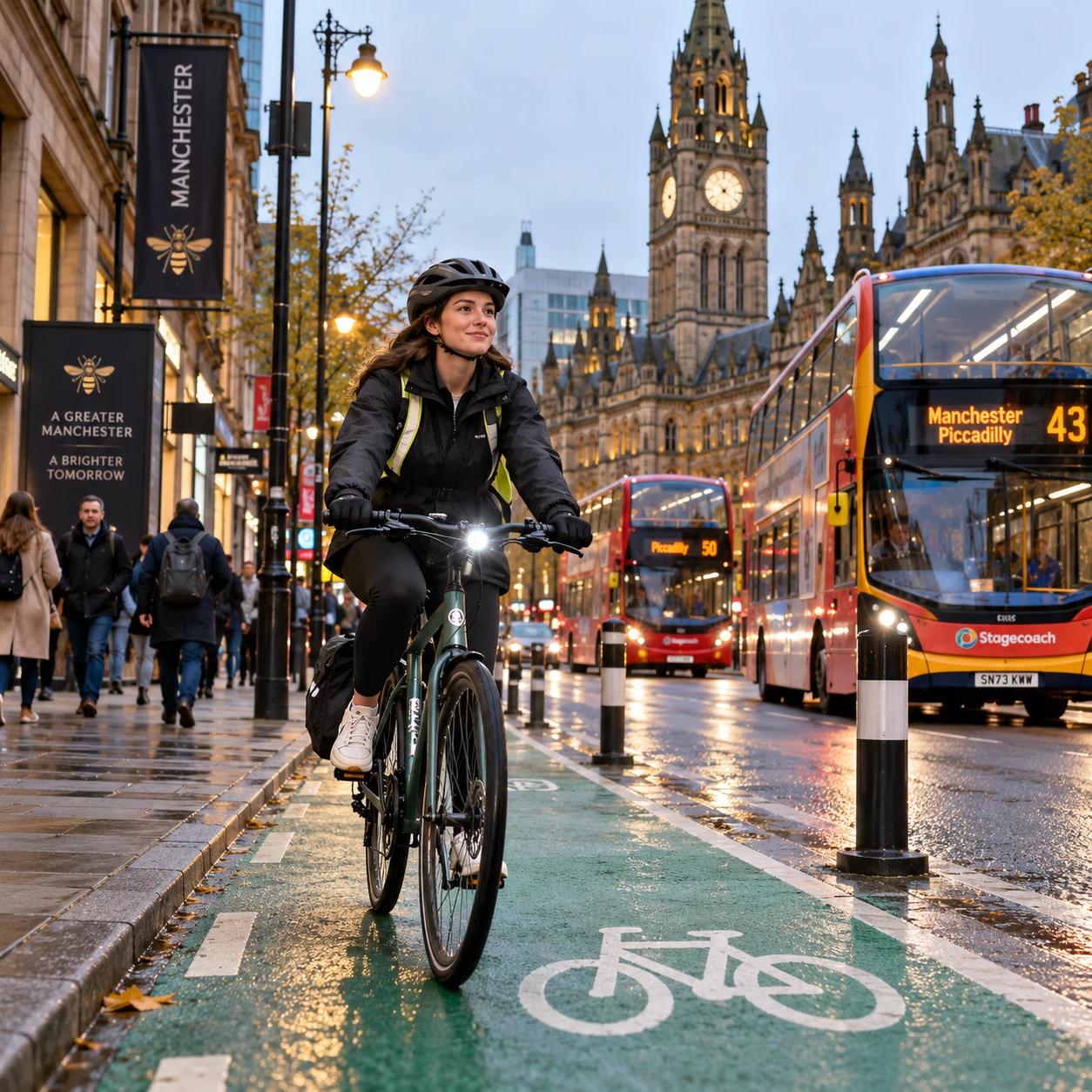
Cycling in Manchester can be a practical way to travel, whether you are commuting, studying or exploring the city. Streets vary from quieter residential roads to busy routes with buses, parked cars, cycle lanes and complex junctions, so a little preparation makes a real difference.
The aim is not to eliminate every risk. It is to make your actions visible and predictable, choose roads that suit your confidence, and leave yourself time and space to respond. These habits help newer riders build confidence and give experienced cyclists a useful reset before the next journey.
Prepare before you ride
Before cycling in Manchester, check that your bike works, fit working lights for low-light conditions, and choose clothing that lets you move freely and be seen. A quick check at home can prevent a minor fault becoming a problem in traffic.
Check the tyres for obvious damage and make sure they feel firm, then test both brakes and confirm that the chain runs smoothly. Check that the handlebars and saddle feel secure. You do not need to perform a full mechanical inspection before every ride; focus on anything that could affect steering, stopping or control.
Use a white front light and a red rear light when visibility is poor and during darkness. In the UK, lights and reflectors are required in the dark; consult the current government guidance on The Highway Code for cyclists for the rules. Keep lights charged and positioned so they can be seen, without aiming a bright beam into other road users’ eyes.
- Wear clothing suited to the weather and easy to move in. A bright outer layer can help in dull conditions.
- Add reflective details to your clothing, bag or bike, especially if you ride after dusk.
- Consider a correctly fitted helmet. It may help protect your head in some crashes, but it cannot prevent collisions or replace attentive riding.
- Carry a lock and a charged phone, and keep loose straps away from the wheels.
Visibility is a combination of lights, reflectors, position and attention. High-visibility clothing can help others notice you, but it does not guarantee that a driver or pedestrian has seen you. Ride as though you may not have been noticed until it is safe to proceed.
Plan a route that suits your confidence
Choose a Manchester cycling route that fits your experience, time and comfort with traffic. A quieter route or suitable cycle lane may take longer, but it can reduce the number of stressful interactions and difficult junctions along the way.
Before setting off, look at the full journey rather than choosing roads solely because they appear direct. Check where cycle lanes begin and end, whether the route crosses major junctions, and whether you will need to share space with buses or pass parked cars. A lane can be useful, but it does not automatically make every junction or nearby road safe.
Try planning with a simple route-fit check: consider traffic exposure, junction difficulty and your own confidence. If one section feels demanding, look for a parallel street, a signed cycle route or a path that is open to cycling. Verify signs and access rules as you go; shared-use paths and pedestrian areas may have restrictions, and pedestrians always need consideration.
- For a first ride, test a short section at a quieter time before using it during a busy commute.
- Allow extra time for unfamiliar roads so you are not pressured to rush through a junction.
- Save an alternative route for roadworks, congestion or a section that feels uncomfortable on the day.
A quieter street is not always the easiest choice if it adds several confusing turns. Likewise, a direct route may suit a confident rider but feel demanding for someone still learning urban cycling. Choose the route you can ride calmly and consistently, then adjust after you have experienced it.
Ride predictably in traffic
To ride predictably in traffic, look ahead, hold a steady road position, signal clearly when appropriate and avoid sudden changes of direction. Other road users can respond more easily when your movements are visible and consistent.
Road positioning depends on the situation. Ride far enough from the kerb to avoid drains, debris and the opening zone of parked-car doors, while leaving room for traffic to pass when it is safe. Do not hug the kerb so closely that drivers are encouraged to squeeze past you. When the road narrows, a lane is blocked or you need to pass an obstruction, move into a more visible position early and hold it until there is space to return.
Before changing position, check behind you, signal if it will help others understand your intention, and look again before moving. A hand signal communicates a plan; it does not make the manoeuvre safe by itself. Keep both hands available for control when you need them, and avoid signalling through a turn if doing so would make you unstable.
Make eye contact where possible, but do not treat it as proof that another person has seen you. Watch wheels, indicators and gaps in traffic, and leave space to stop. At lights, position yourself where you can be seen and where you will not be trapped beside a large vehicle. Never pass a lorry or bus on the inside when it may turn across your path.
Predictability is more useful than speed. A steady pace, early decisions and clear signals give you more time to assess traffic. If a gap does not feel safe, wait for another one.
Handle junctions and other challenging spots
At junctions and other difficult spots, slow down early, scan for people and vehicles, and take the space you need to make a safe manoeuvre. Manchester streets differ, so follow the signs, markings and traffic signals at each location rather than relying on a single routine.
For a turn, check behind you before moving across the road, signal when useful, and approach at a speed that lets you stop. At a busy junction, it may be safer to wait for a clear phase or use a designated crossing by dismounting if that is permitted and appropriate. Do not weave through stationary traffic or assume a driver has noticed you in a blind spot.
Roundabouts can feel demanding. Approach at a controlled speed, choose a position that makes your intended route clear, and watch for vehicles entering or changing lanes. If you are unsure how to navigate a particular roundabout, choose a quieter alternative or dismount and use a suitable pedestrian crossing where available.
Parked cars create a risk when doors open unexpectedly. Look for occupants, brake lights and gaps between vehicles, and leave enough room to avoid the door zone. Near bus lanes, check the signs for operating hours and permitted users. Buses can stop suddenly, and passengers may step into the road, so avoid passing a stopped bus closely or at speed.
When cycle lanes cross pedestrian routes, reduce speed and give people room, especially near bus stops, crossings and shared-use paths. Do not expect pedestrians to move out of your way. A bell can help alert someone, but use it courteously and be ready to slow or stop.
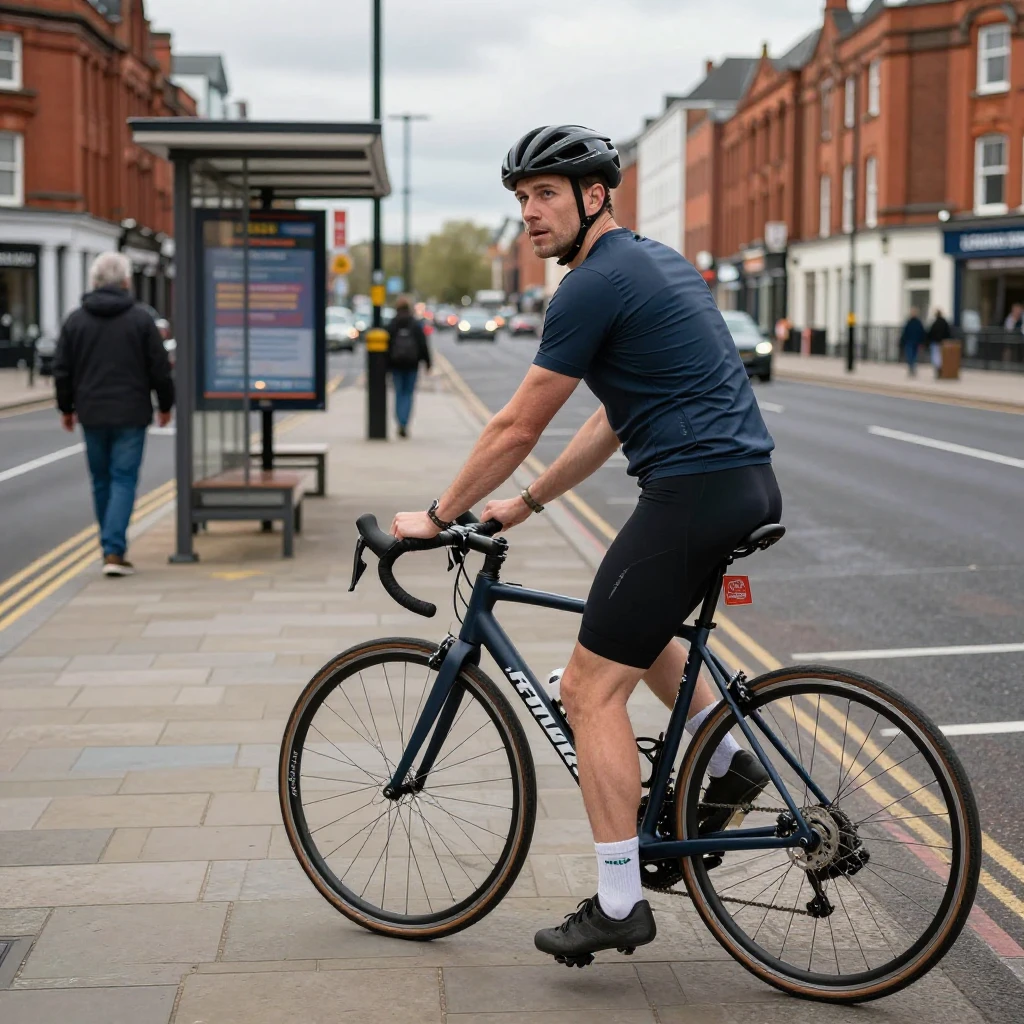
Stay alert to changing conditions
Adapt your speed, visibility and following distance when Manchester’s weather, light or road surface changes. Rain, darkness and busy streets can reduce grip and make it harder for everyone to see hazards in time.
Wet road markings, metal covers and painted surfaces can be slippery, particularly while turning or braking. Ride smoothly, avoid sharp steering and leave extra distance to stop. After heavy rain, watch for standing water that can conceal potholes or debris. If a surface looks uncertain, slow down and take a line that gives you room to avoid it without swerving into traffic.
In low light, switch on your lights before visibility drops. Clean the lenses, check that batteries are charged and use reflective details that catch light from different angles. Fog, spray and glare can make a familiar street feel different; reduce speed and avoid relying on another person to spot you at the last moment.
Give yourself space around pedestrians, parked vehicles and moving traffic. Avoid riding in a vehicle’s blind spot, and do not use headphones at a volume that blocks traffic sounds. If conditions become too poor for you to ride confidently, pause somewhere safe, choose a different route or walk the bike.
Build safer habits over time
Safer urban cycling develops through repeatable habits: practise key manoeuvres, stay alert to changing streets and review routes after each ride. You do not need to master every road at once; build confidence in manageable steps.
Practise starting, stopping, shoulder checks and signalling on a quiet street or in an empty space before using them in traffic. Then try a short familiar journey and add more challenging sections as your comfort grows. If a junction regularly feels difficult, plan a different approach rather than forcing yourself through it.
After a ride, take a moment to consider what worked. Did a cycle lane end abruptly? Was a turn hard to see? Did a route feel busy at a particular time? Note the detail and adjust your plan next time. This turns route planning into a practical feedback loop instead of a one-off map search.
Common mistakes are often small: riding too close to parked cars, assuming a signal guarantees a safe gap, or following a route without checking its junctions. Correct them by leaving door space, checking again before moving, and reviewing the difficult points in advance. Protective gear helps, but careful observation, clear decisions and a route suited to your confidence remain central to cycling safety in Manchester.
Frequently asked questions
What should I check on my bike before a city ride? Check tyre condition and pressure, test both brakes, and make sure the handlebars, saddle and chain are secure and working. Confirm that your lights work if you may ride in darkness or poor visibility.
How can I choose a safer cycling route through Manchester? Compare traffic levels, cycle lanes, junctions and road complexity, not just distance. Test unfamiliar sections at a quieter time and keep an alternative route in mind.
How should I approach busy junctions? Slow down early, look around, signal when useful and position yourself clearly. Wait for a safe opportunity; if the junction feels beyond your confidence, choose another route or dismount where appropriate.
What lights and reflective gear should I use? Use a working white front light and red rear light in darkness, and add reflective details to clothing or bags. Keep lights charged and aimed considerately, and remember that visibility gear does not replace safe riding.