The Rise of E-Bikes in Manchester: Trends, Benefits, and Urban Impact
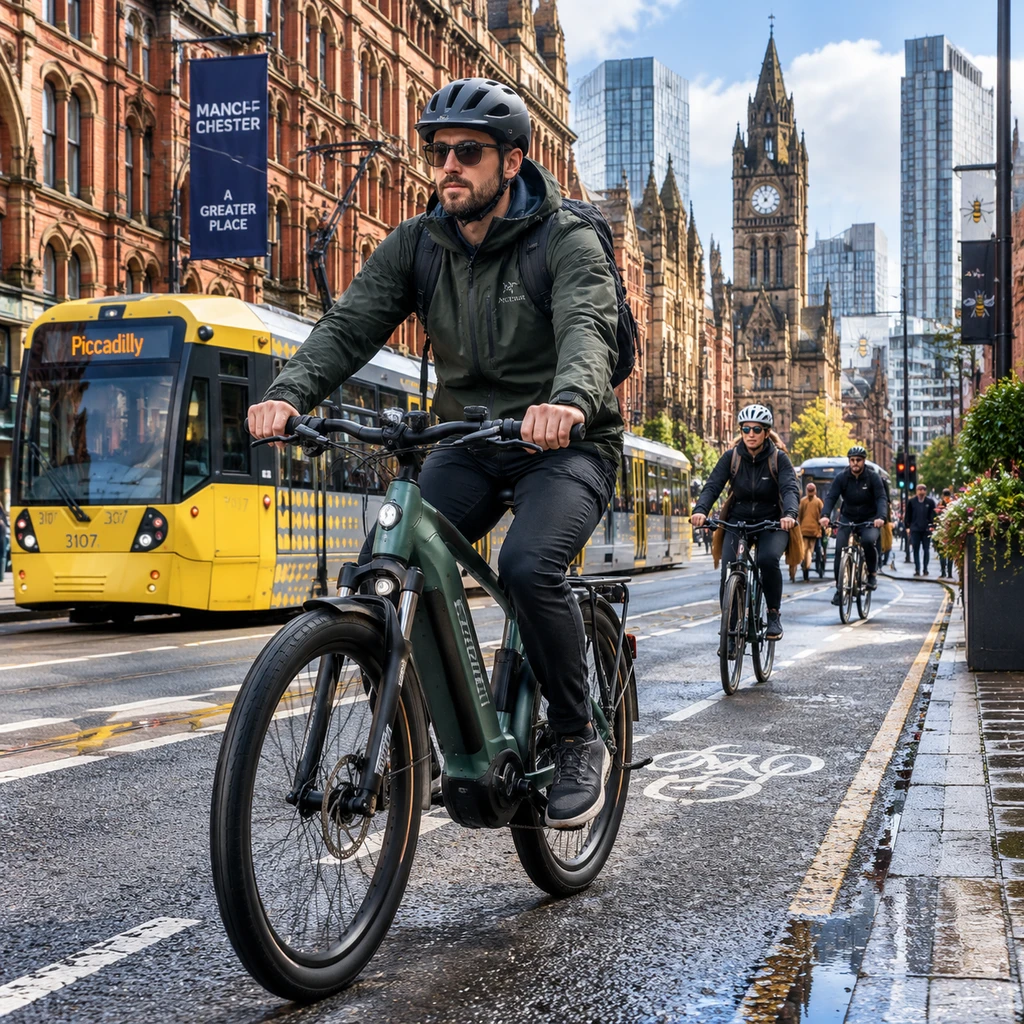
E-bikes are becoming a more visible part of urban cycling in Manchester, offering pedal assistance that can make everyday journeys feel more manageable. For a commuter crossing town, a parent carrying shopping, or someone travelling from a neighbourhood beyond the city centre, an electric-assist bike can widen the range of trips that feel practical without a car.
The trend does not mean e-bikes have solved Manchester’s transport challenges. Their usefulness depends on route quality, secure parking, charging access and the rider’s needs. Still, they give residents another option in a city where journey distance, hills, weather and traffic can all affect whether cycling fits into daily life.
Why e-bikes are gaining traction in Manchester
E-bikes are gaining traction in Manchester because electric assistance makes cycling easier to fit into commutes and everyday trips. Riders can cover longer distances, tackle inclines and arrive with less effort than on a conventional bike, while still getting exercise and avoiding much of the delay of driving in busy areas.
Manchester journeys vary: a short ride to a local shop is different from a cross-city commute or a trip from a surrounding neighbourhood into the centre. Assistance can make the second and third kinds of journey more realistic, especially for people who would otherwise find the distance or effort a barrier. It can also help riders carry a work bag, groceries or child-carrying equipment.
Weather matters, too. Rain and wind do not disappear with an electric motor, but reducing the effort of a ride may make it easier to keep cycling through less-than-ideal conditions. That benefit comes with a trade-off: e-bikes cost more than many standard bicycles, and the motor and battery add weight that riders notice when lifting or manoeuvring the bike.
There is no single local figure that captures everyone’s experience or proves how quickly use is growing. A useful way to understand the shift is to look at which trips an e-bike makes possible: journeys that are too long to walk, inconvenient by bus, or tiring on a regular bike may become reasonable alternatives.
How e-bikes fit into Manchester’s transport network
E-bikes fit Manchester’s transport network as a flexible option for the first or last part of a journey, or as a direct alternative to a car or public transport trip. Riders can use cycle routes and suitable streets to reach work, shops or a station, then decide whether the whole journey is practical by bike.
For example, someone living outside the centre might ride to a rail or tram connection when taking an e-bike all the way would not suit their schedule. Others may find that cycling door to door is simpler than combining a short bus ride with a walk. The best choice depends on the full trip: travel time, connections, weather, storage and whether the destination has secure bike parking.
Plan routes around conditions you are comfortable with, rather than relying only on the shortest line on a map. A quieter street or a signed cycle route may be preferable even if it adds a few minutes. Check current route information before setting out, since construction, temporary closures and changing street conditions can affect a familiar ride. For background on how cycling relates to wider urban travel, the UK government’s cycling and walking guidance provides relevant national context.
Public transport and e-bikes can complement each other, but carrying a bike on a train or tram may be subject to operator rules, space and time restrictions. Check those rules before travelling. In many cases, a foldable or compact bike may be more convenient, but it can involve compromises in comfort, carrying capacity and price.
Benefits for local riders and the city
E-bikes can make longer urban journeys easier for local riders and offer an alternative to some car trips. They may also support more accessible cycling by reducing the effort needed to travel, though they cannot remove every physical, financial or infrastructure barrier.
For an individual commuter, pedal assistance can help keep journey effort more consistent. A rider may reach work without needing a full change of clothes, or make a detour for errands without adding the same physical strain as a conventional bike. People with different fitness levels can also ride together more comfortably, since assistance can reduce the gap between their speeds and stamina.
At city level, each car journey replaced by a bicycle can mean one fewer vehicle taking road space for that trip. If many people make that switch, e-bikes could help reduce traffic congestion and demand for parking. The effect depends on how people travel: replacing a short car trip has a different impact from replacing a walk, and an e-bike cannot carry every passenger or load a car can.
Accessibility is a matter of fit, not a guarantee. E-bikes may help someone manage distance or a gradual incline, but heavier frames, high purchase costs, inaccessible cycle routes and the need to balance or mount the bike may still be obstacles. A test ride on a representative route is a better guide than assuming assistance makes every journey suitable.
Challenges of e-bike use in an urban setting
The main challenges of urban e-bike use are route conditions, road safety, secure parking, battery charging and cost. These issues vary by neighbourhood and building, so riders should check their own journeys and storage arrangements rather than assume that every part of Manchester offers the same facilities.
Cycle infrastructure can change from street to street. Some routes may offer space separated from motor traffic, while others require riders to share busy roads or navigate junctions. Plan a route that matches your experience, and practise unfamiliar turns at a quieter time. A motor assists pedalling; it does not make a rider less vulnerable in a collision.
Parking and theft prevention deserve attention before buying. Look for a secure indoor space at home and at work, and use a high-quality lock to secure the frame to an immovable stand. A removable battery can make indoor storage easier, but it does not protect the bike itself from theft. Ask building managers about their rules rather than leaving a bike in an unsuitable hallway or escape route.
Battery charging usually means planning access to a suitable socket where the bike can be stored safely. Follow the manufacturer’s instructions, use the supplied or approved charger, and avoid charging a damaged battery or leaving it unattended in an inappropriate location. If you cannot store the bike securely or charge it reliably, that may outweigh the benefits of electric assistance.
Cost includes more than the purchase price. Consider maintenance, replacement parts, insurance where appropriate, and the eventual cost of a battery replacement. Very low-cost models can be tempting, but support, compatible components and clear safety information matter for a vehicle used regularly in city traffic.
Choosing and using an e-bike in Manchester
Choose an e-bike for the journeys you actually make: match its riding position, range, carrying capacity and storage needs to your route and routine. A bike that handles a regular commute comfortably is more useful than one selected mainly for a headline specification.
Before buying, write down your typical trip length, the steepest or most demanding section, where you will lock the bike and how you will charge it. Then compare models against those needs:
- For commuting: Prioritise a comfortable position, reliable lights, practical mudguards and a rack or bag system if you carry work items.
- For mixed trips: Check whether the bike can carry groceries or other regular loads safely, and whether its weight is manageable at home and at work.
- For public transport connections: Confirm the operator’s current bike rules and consider how easy the bike is to secure or carry when connections are busy.
- For storage constraints: Measure doorways, lifts and storage spaces, and check whether the battery can be removed for charging.
Ask for a test ride that resembles your real use, including starts, stops and turns. Check that you can mount and dismount comfortably, reach the controls and handle the bike at walking speed. An e-bike’s extra weight can matter when parking or pushing it up steps. Learn how the assistance levels respond before riding in heavy traffic, and begin on a quieter route.
For safety, use working front and rear lights, wear a helmet if you choose to, signal clearly and leave room around parked cars. Ride at a speed that gives you time to react, especially at junctions and on shared paths. Follow the manufacturer’s instructions and applicable UK rules for electrically assisted pedal cycles; a bike outside those rules may be treated differently in law.
What the e-bike trend could mean for Manchester
E-bikes could make cycling a more practical part of Manchester’s everyday transport mix, especially for trips that are too long or demanding for some people on conventional bikes. Their longer-term effect on commuting, congestion and city life will depend on infrastructure, affordability, secure storage and whether residents find them convenient enough to use regularly.
If more people choose e-bikes for local journeys, demand may grow for continuous cycle routes, safe junctions, bike parking and charging options. Those changes could benefit riders on conventional bicycles as well. But e-bike growth alone cannot guarantee better traffic conditions: congestion also reflects land use, travel choices, road capacity and the availability of reliable alternatives.
There are practical uncertainties, too. Residents in homes without secure storage may face a bigger barrier than those with a garage or dedicated bike room. Public transport rules can limit how easily a bike fits into a longer journey, while battery replacement and purchase costs may put ownership out of reach for some households. A fair transport approach needs to account for those differences rather than treating e-bikes as a universal answer.
For now, the clearest way to judge the trend is at street level. Does an e-bike make your own commute or regular errand easier, safer and more predictable? If so, it can be a useful part of Manchester’s urban cycling picture, provided the route, parking and charging arrangements work in practice.
Frequently asked questions
Are e-bikes suitable for commuting in Manchester?
Yes, e-bikes can suit many Manchester commutes, particularly when the distance, route and storage arrangements work for the rider. Test the full journey if possible, check cycle route conditions and make sure you have a safe place to park and charge the bike.
What should riders consider when choosing an e-bike?
Consider journey length, comfort, carrying needs, bike weight, battery charging and secure storage. Take a test ride and confirm the model meets applicable UK requirements for electrically assisted pedal cycles.
Where can e-bike riders charge and store their bikes?
Riders generally need access to a secure storage area and a suitable socket, often at home or work. Ask the property manager or employer about approved storage and charging arrangements, and follow the battery maker’s safety instructions.
How can e-bike riders stay safe in city traffic?
Choose a route that matches your confidence, use working lights, signal clearly and approach junctions at a controlled speed. Practise the bike’s assistance settings away from heavy traffic, and stay alert around parked vehicles and other road users.